
IIoT sensors 101: which sensors to put on which equipment (complete guide).
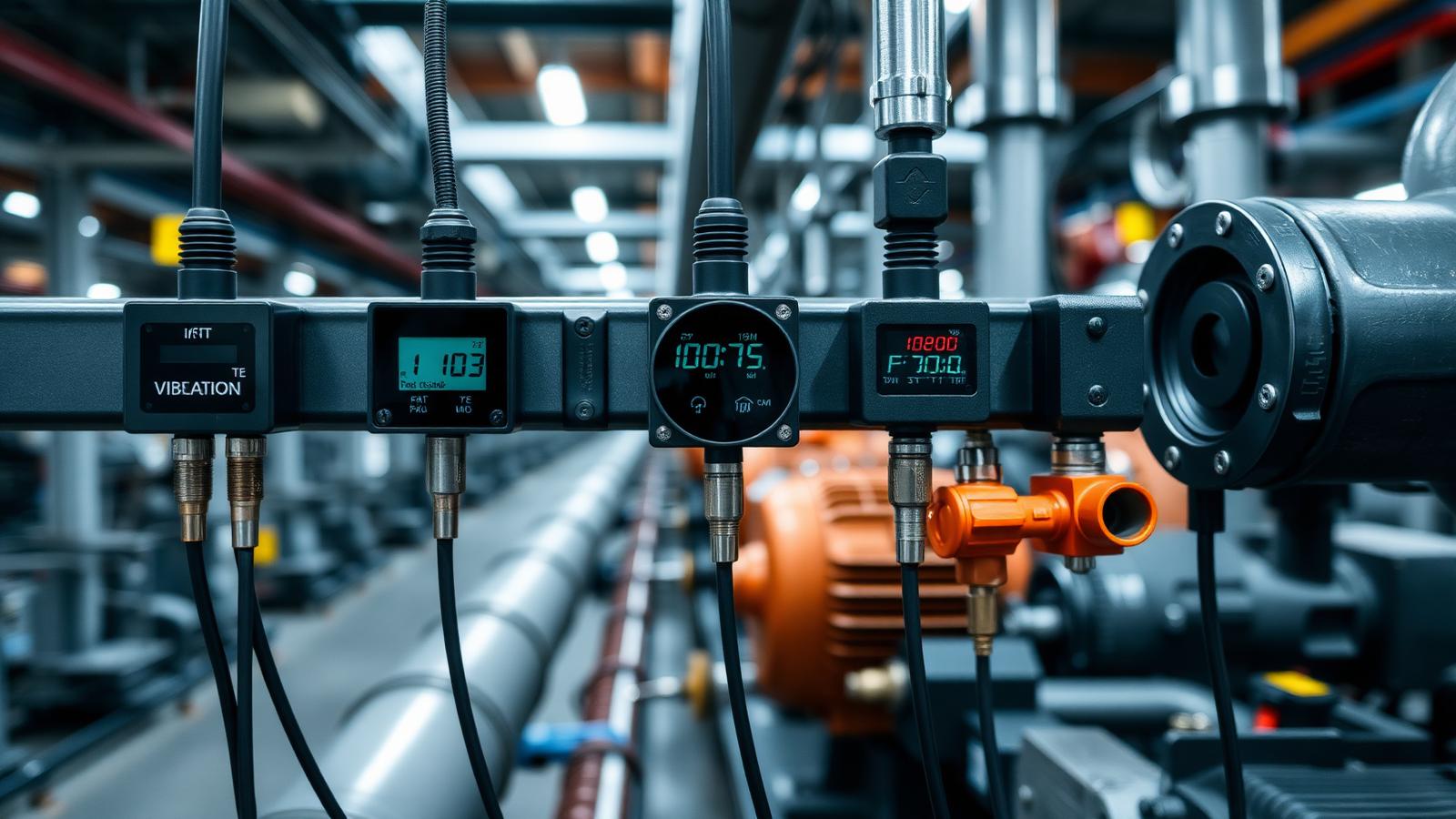
The right industrial IoT sensor for predictive maintenance depends on the asset. Pumps and motors get vibration + temperature. Compressors add current signature analysis. Fans need vibration only. Gearboxes need vibration plus acoustic emission. RTOs need pressure differential and multi point thermocouples. Wrong sensor on the wrong asset produces noise, not alerts.
Which sensors go on which equipment?
| Asset | Primary sensors | What it catches |
|---|---|---|
| Electric motor | Vibration + temp + current | Bearing wear, stator faults, misalignment |
| Centrifugal pump | Vibration + temp | Bearing wear, cavitation, seal failure |
| Reciprocating compressor | Vibration + current + pressure | Valve failure, piston wear, unloader issues |
| Screw compressor | Vibration + oil temp + pressure | Rotor wear, oil starvation, discharge fouling |
| Fan / blower | Vibration + temp | Imbalance, bearing wear, belt looseness |
| Gearbox | Vibration + acoustic + oil temp | Gear tooth defects, lube starvation |
| RTO / thermal oxidizer | Pressure ΔP + multi point temp + vibration | Valve wear, media plugging, fan bearing |
| Cooling tower | Vibration + temp + flow | Fan imbalance, gearbox wear, drift |
| CNC spindle | Vibration + temp + current | Bearing wear, tool imbalance, thermal drift |
| Conveyor drive | Vibration + current | Motor bearing, gearbox, drum bearing |
How many sensors per asset?
- Simple assets (single bearing fan, small pump), 1 vibration + temp sensor is sufficient.
- Standard assets (motor-driven pumps, compressors), 2 sensors: motor drive-end and pump/driven-end.
- Complex assets (multi stage compressors, gearboxes), 3 4 sensors across bearing locations.
- Critical / high-value assets, always over-instrument by one extra channel for redundancy.
Wireless battery-powered vs wired sensors: the honest tradeoffs
| Wireless (battery) | Wired | |
|---|---|---|
| Install time per sensor | 10 20 min | 2 4 hours |
| Battery life | 3 5 years | N/A |
| Continuous streaming | No (sampled) | Yes |
| Max sample rate | 10 25 kHz | 50+ kHz |
| Best for | Retrofit, 80% of assets | Top 10 critical, high speed |
Cellular vs plant-network connectivity
Cellular gateways (LTE-M / NB-IoT) mean no IT project, no VLAN request, no cybersecurity review. Plant-network (Wi-Fi, Ethernet) means lower recurring cost but needs IT approval. For most SMB deployments, cellular gets you live in weeks; Wi-Fi gets you live in quarters.
Common questions
How long does it take to install IIoT sensors on a plant?+
For 30 60 wireless sensors across the critical assets in a mid size plant, installation typically takes 2 4 days of on site work with a two person team.
Do IIoT sensors need Wi Fi or plant network?+
Not necessarily. Cellular backed edge gateways bypass the plant network entirely, avoiding IT approval delays. This is often the difference between deploying in weeks vs quarters.
How long do wireless IIoT sensor batteries last?+
Typically 3 5 years depending on sample frequency. Higher sampling drains faster. Good vendors include replacements in the subscription.
Can I mix sensors from different vendors?+
Physically yes; practically it's a headache. Multi vendor deployments require the analytics platform to normalize different data formats and often lose the FFT waveforms.
Ready to see this on your plant?
A plant assessment takes one site walk. You get a prioritized list of your highest risk assets and a downtime cost model, free.
Book a Plant Assessment